

Wrongful Death Lawsuits in Dallas: What Families Need to Know
Published on: March 6, 2026 | Author: MIGAdmin
Losing someone you love is hard enough. When that loss happens because of someone else’s careless or reckless actions, the pain often feels heavier. There’s grief, yes. But there’s also anger, confusion, and a lot of unanswered questions.
In Dallas and throughout Texas, families who lose a loved one due to another party’s negligence may have the right to file a wrongful death lawsuit. This type of case isn’t about “putting a price” on someone’s life. It’s about accountability. It’s about protecting your family’s future when the unexpected turns your world upside down.
If you’re searching for guidance after a sudden loss, here’s what you need to know about wrongful death lawsuits in Dallas and how the process works.
Table of Contents
Toggle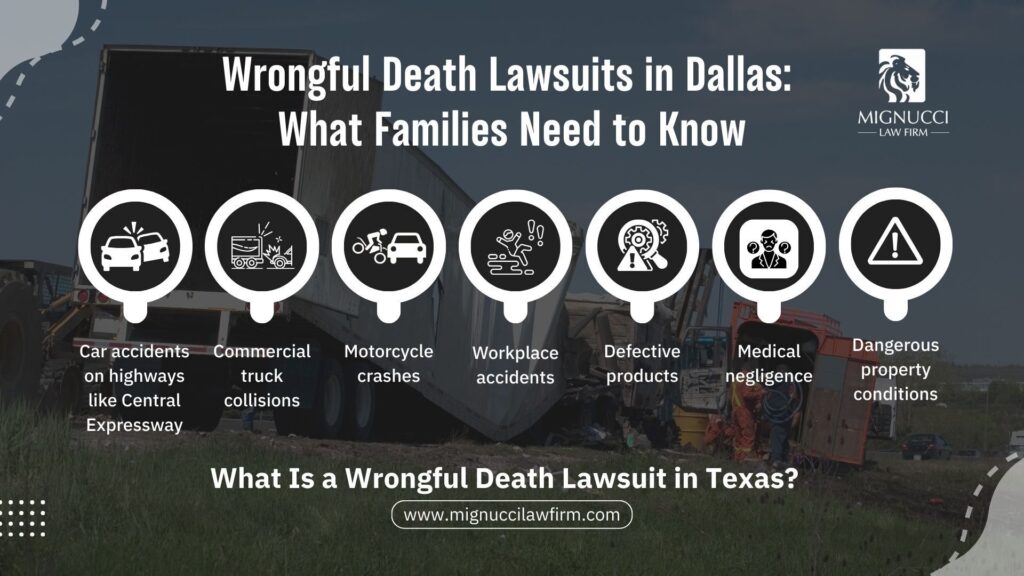
What Is a Wrongful Death Lawsuit in Texas?
Under Texas law, a wrongful death claim arises when a person dies because of another party’s wrongful act, neglect, carelessness, lack of skill, or default. In simple terms, if the deceased person could have filed a personal injury lawsuit had they survived, their surviving family members may now have the right to bring a wrongful death case.
Common situations that lead to wrongful death claims in Dallas include:
- Car accidents on highways like I-35E or Central Expressway
- Commercial truck collisions
- Motorcycle crashes
- Workplace accidents
- Defective products
- Medical negligence
- Dangerous property conditions
These cases often involve insurance companies, corporate defendants, or large institutions. The legal issues can feel overwhelming at a time when your energy is already drained. That’s why understanding the basics matters.
Who Can File a Wrongful Death Claim in Dallas?
Texas law limits who can bring a wrongful death lawsuit. Typically, the following family members may file:
- The surviving spouse
- Children, including legally adopted children
- Parents of the deceased
Siblings are not eligible to file a wrongful death claim under Texas law. If none of the eligible family members file within three months of the death, the executor or administrator of the estate may file, unless a family member specifically asks them not to.
These rules can feel strict. After all, grief affects many people, not just immediate family. But the law draws clear lines about who has standing in court.
What Must Be Proven in a Dallas Wrongful Death Case?
A wrongful death lawsuit is still a civil case. That means the family must prove certain elements to succeed. In most cases, this includes showing:
- A duty of care existed.
For example, drivers have a duty to operate their vehicles safely. - That duty was breached.
Maybe the driver was speeding, texting, or driving under the influence. - The breach caused the death.
There must be a direct link between the careless action and the fatal outcome. - The surviving family suffered damages.
Insurance companies often challenge one or more of these elements. They may argue the deceased was partly at fault, or that the damages claimed are too high. Building a strong case requires careful investigation, witness statements, medical records, and sometimes expert testimony.
Types of Compensation Available in Texas Wrongful Death Cases
No amount of money replaces a loved one. That’s obvious. Still, financial recovery can help stabilize a family’s future and relieve some of the stress that follows a sudden death.
In Dallas wrongful death cases, compensation may include:
Economic Damages
These are measurable financial losses, such as:
- Lost income and future earning capacity
- Loss of benefits like health insurance or retirement contributions
- Funeral and burial expenses
- Loss of inheritance
If the deceased was the primary breadwinner, these losses can be devastating.
Non-Economic Damages
These are harder to measure but just as real:
- Loss of companionship and love
- Loss of parental guidance
- Emotional pain and mental anguish
Courts and juries understand that the impact of a wrongful death goes far beyond finances.
Punitive Damages
In cases involving gross negligence or intentional harm, Texas courts may award punitive damages. These are meant to punish the wrongdoer and deter similar behavior in the future. Drunk driving fatal crashes, for example, sometimes involve claims for punitive damages.
How Long Do You Have to File in Dallas?
Texas generally gives families two years from the date of death to file a wrongful death lawsuit. This is known as the statute of limitations.
Two years might sound like a long time, especially when you’re dealing with grief, probate issues, and daily responsibilities. But building a case takes time. Evidence can disappear. Witness memories fade. Surveillance footage may be erased.
Waiting too long can close the door entirely. Once the statute of limitations expires, courts will usually dismiss the case, no matter how strong it might have been.
There are limited exceptions, but they are rare. It’s wise to speak with a wrongful death attorney in Dallas as soon as you’re able, even if you’re unsure about filing.
The Difference Between Wrongful Death and Survival Claims
This part often confuses families.
A wrongful death claim compensates surviving relatives for their losses. A survival claim, on the other hand, is brought on behalf of the deceased person’s estate. It covers damages the deceased could have claimed had they survived, such as:
- Medical expenses before death
- Pain and suffering experienced before passing
- Property damage
In many Dallas cases, both claims are filed together. They serve different legal purposes but arise from the same tragic event.
What If the Death Was Caused by a Car or Truck Accident?
Motor vehicle accidents are one of the most common causes of wrongful death cases in Dallas County. The area’s heavy traffic, major highways, and commercial trucking routes increase the risk of severe crashes, which is why many families turn to a motor vehicle accident attorney when trying to understand their legal options after a fatal collision.
In fatal car or truck accident cases, investigations may involve:
- Police crash reports
- Black box data from commercial trucks
- Cell phone records
- Toxicology results
- Traffic camera footage
Commercial trucking cases can be especially complex. Federal safety rules may apply. Multiple parties might share responsibility, including the driver, trucking company, maintenance contractor, or even a cargo loader.
Insurance policies in these cases are often larger, and so is the resistance from insurers. Families are sometimes pressured into early settlements that don’t fully reflect long-term losses.
Workplace Fatalities and Third-Party Claims in Dallas
Texas has unique workers’ compensation rules. Not all employers subscribe to the state workers’ compensation system. When a fatal workplace accident happens, the path forward depends on whether the employer carries coverage.
If the employer subscribes to workers’ compensation, families may receive death benefits. These benefits are limited and do not include pain and suffering damages.
If the employer does not carry workers’ compensation, the family may have the right to file a wrongful death lawsuit directly against the employer.
There may also be third-party claims. For example, if faulty equipment caused the fatal injury, the manufacturer might be liable. These cases require careful review of contracts, safety records, and industry standards.
Medical Negligence and Fatal Outcomes
When a death results from medical negligence, emotions can run high. Families often struggle with guilt and doubt. Was something missed? Should a diagnosis have come sooner?
Medical malpractice wrongful death cases in Dallas require proof that a healthcare provider failed to meet the accepted standard of care and that this failure directly caused the death.
Texas law places specific procedural requirements on these cases, including expert reports early in the litigation process. Without proper medical support, courts can dismiss the claim.
These cases are detailed and highly technical, but at their core, they come down to whether a preventable mistake took someone’s life.
How the Legal Process Typically Unfolds
Many families hesitate to contact a lawyer because they picture a drawn-out courtroom battle. The reality can look different.
Here’s a general outline of what often happens in a Dallas wrongful death case:
- Initial consultation and case review
- Investigation and evidence gathering
- Filing of the lawsuit
- Exchange of information between both sides
- Negotiations with insurance companies
- Mediation or settlement discussions
- Trial, if necessary
Most wrongful death cases settle before trial. That said, trial preparation is often what pushes insurance companies to offer fair compensation. If the other side believes a family is ready to present their case in court, negotiations tend to become more serious.
What to Expect Emotionally During a Lawsuit
Let’s be honest. Filing a lawsuit after losing a loved one isn’t easy. Legal proceedings can bring back painful memories. Depositions may require you to answer difficult questions.
At the same time, many families say that seeking justice gives them a sense of purpose. It can provide structure during a chaotic time. It can also prevent the responsible party from avoiding accountability.
Grief doesn’t follow a schedule. Some days feel manageable. Others hit out of nowhere. A compassionate legal team should understand that and give you space when you need it.
Choosing the Right Wrongful Death Attorney in Dallas
Not all personal injury lawyers handle wrongful death cases with the same level of care. These cases demand more than legal knowledge. They require empathy, patience, and a willingness to stand firm against large insurance carriers.
When considering a wrongful death attorney in Dallas, you may want to ask:
- How many wrongful death cases have you handled?
- Will you personally handle my case?
- How are fees structured?
- What challenges do you see in my case?
Most wrongful death attorneys work on a contingency fee basis, meaning they only get paid if the case results in a recovery.
If you’re evaluating your options, Mignucci Law Firm represents families in Dallas who are facing these difficult circumstances and seeking accountability through the civil justice system.
Local Courts and Filing in Dallas County
Wrongful death lawsuits in the Dallas area are typically filed in Dallas County civil courts, depending on jurisdiction and the amount in controversy. Procedures follow Texas civil rules, and local court practices may affect scheduling and timelines.
Having counsel familiar with Dallas County courts can help avoid procedural missteps and keep the case moving forward.
Why Acting Sooner Can Make a Difference
After a loss, legal action is rarely the first thing on your mind. That’s understandable. Still, early action can protect your rights.
Preserving evidence quickly can make a real difference. Skid marks fade. Video footage gets erased. Witnesses move away. Acting sooner also allows your legal team to communicate directly with insurance carriers, so you’re not fielding stressful calls during a vulnerable time.
You don’t have to decide everything immediately. But having information early gives you options.
Moving Forward After a Wrongful Death in Dallas
Nothing about a wrongful death lawsuit is simple. It’s legal, financial, and deeply personal all at once. Still, understanding your rights can bring a measure of clarity when life feels uncertain.
Holding a negligent party accountable won’t bring your loved one back. What it can do is protect your family’s future and send a clear message that careless actions have consequences.
If your family is facing this situation in Dallas, speaking with a wrongful death attorney can help you understand your options and next steps. Mignucci Law Firm assists families throughout the Dallas area who are navigating these painful cases and seeking justice under Texas law.
Frequently Asked Questions
How much is a wrongful death lawsuit worth in Dallas?
There is no fixed amount. The value depends on factors such as the deceased person’s income, age, health, relationship to surviving family members, and the circumstances of the death. Each case is unique.
How long does a wrongful death case take in Texas?
Some cases settle within several months. Others take a year or more, especially if they go to trial. The timeline depends on the complexity of the case and the willingness of the parties to negotiate.
Do all wrongful death cases go to court?
No. Many cases resolve through settlement negotiations or mediation. A trial usually happens only if both sides cannot agree on fair compensation.
Can multiple family members file separate lawsuits?
Eligible family members may join together in one lawsuit. Separate lawsuits are typically consolidated if filed independently.
What if the deceased was partly at fault?
Texas follows a modified comparative fault rule. If the deceased was more than 50 percent responsible, recovery may be barred. If they were 50 percent or less at fault, compensation may be reduced by their percentage of fault.