

Understanding Texas Car Accident Laws After a Crash
Published on: March 13, 2026 | Author: MIGAdmin
A car crash can turn an ordinary day upside down in seconds. One moment you’re driving to work or heading home, and the next you’re dealing with police reports, insurance calls, vehicle damage, and maybe even pain that wasn’t there five minutes ago.
In Texas, knowing what steps to take after a crash can make a big difference, and consulting a Dallas car wreck lawyer can help protect your rights. The law sets clear rules about fault, insurance, medical bills, and deadlines for filing a claim. Without understanding these rules, it’s easy to make decisions that could hurt your case.
This guide walks through just what you need to know if you’ve been in a crash and are trying to figure out your next move.
Table of Contents
Toggle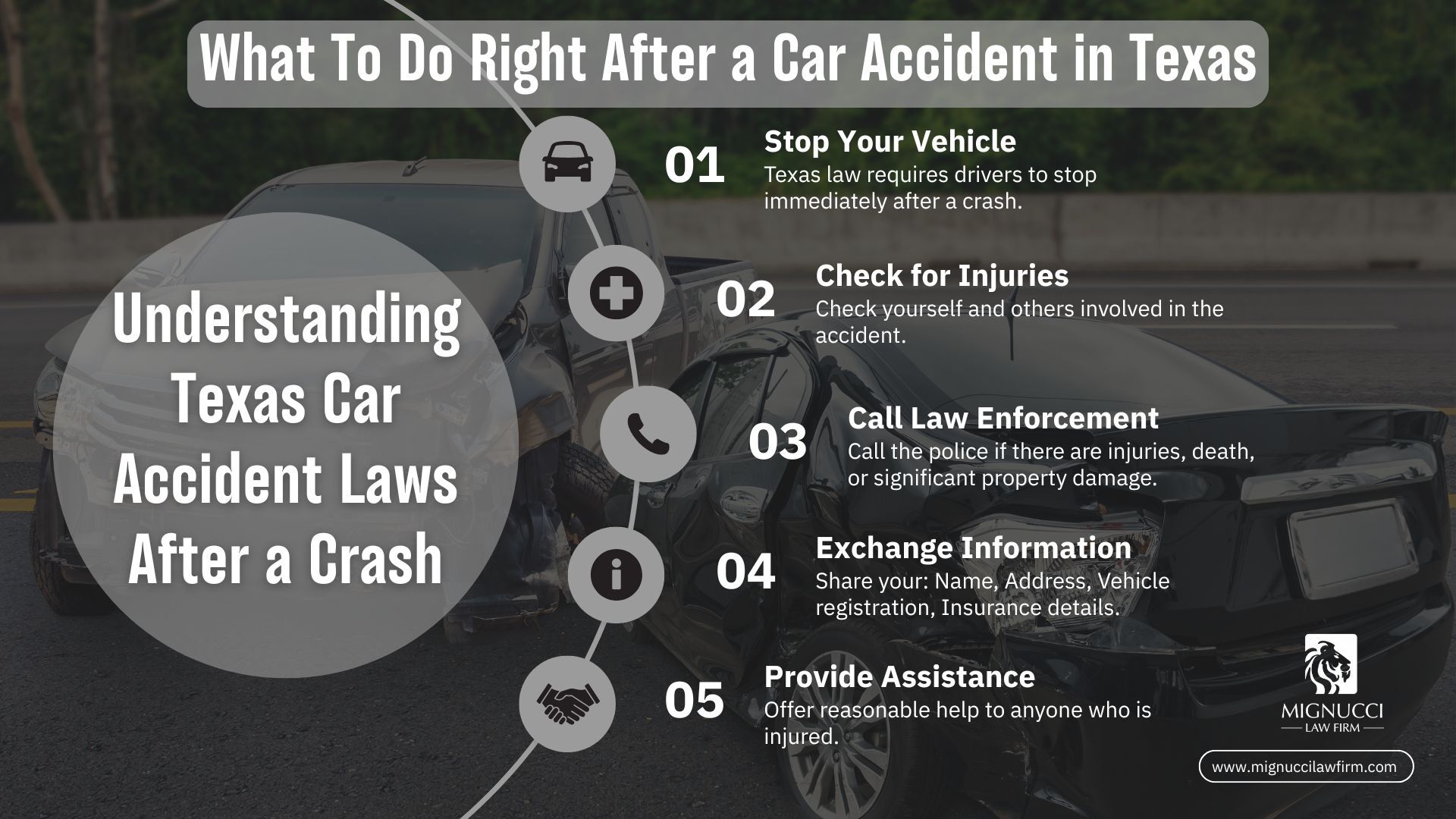
What Texas Law Requires Right After a Car Accident
After a collision in Texas, drivers have certain legal duties. These apply whether the crash happens on a busy Dallas freeway or a quiet neighborhood street.
If the accident involves injury, death, or property damage, you must:
- Stop your vehicle immediately
- Check on others involved.
- Call law enforcement if there are injuries or major damage.
- Provide your name, address, vehicle registration, and insurance information.n
- Offer reasonable assistance if someone is hurt.
Leaving the scene without stopping can lead to criminal charges. Even if the crash seems minor, staying put and exchanging information protects you later.
In many cases, a police report becomes one of the most important pieces of evidence. It records the officer’s observations, statements from drivers and witnesses, and basic details about what happened.
Texas Is a Fault State. What That Really Means
Texas follows a fault-based system for car accidents. That means the person who caused the crash is financially responsible for the damage.
If another driver caused the collision, you can typically pursue compensation through:
- Their auto insurance policy
- Your own uninsured or underinsured coverage, if applicable
- A personal injury lawsuit, if necessary
Insurance companies don’t automatically accept blame. They investigate. They review statements. They look at photos. They may even argue that you share responsibility.
Which brings us to one of the most important legal concepts in Texas accident cases.
Understanding Modified Comparative Fault in Texas
Texas uses a rule called modified comparative fault. It works like this:
- You can recover compensation if you are 50 percent or less at fault.
- If you are 51 percent or more at fault, you cannot recover damages.
If you are partially responsible, your compensation is reduced by your percentage of fault.
Here’s a simple example.
Suppose your total damages are $100,000, but you are found 20 percent at fault. You would recover $80,000.
This rule is often heavily debated in insurance negotiations. Even a small shift in fault percentage can change the outcome of a claim. That’s why clear evidence matters.
Minimum Insurance Requirements in Texas
Texas drivers are required to carry liability insurance. The minimum coverage is often described as 30 60 25 coverage:
- $30,000 for bodily injury per person
- $60,000 for total bodily injury per accident
- $25,000 for property damage
These limits are the legal minimum. In serious crashes, medical bills alone can exceed those amounts quickly.
If the at-fault driver has only minimum coverage and your damages are higher, you may need to look to your own uninsured or underinsured motorist coverage. This is optional in Texas, but insurers must offer it unless you reject it in writing.
Common Causes of Car Accidents in Texas
Crashes happen for many reasons, but certain patterns show up again and again across Texas highways and city roads.
Some of the most common causes include:
- Distracted driving, especially texting
- Speeding
- Drunk or drug-impaired driving
- Running red lights or stop signs
- Failing to yield
- Tailgating
- Fatigue
In large metro areas like Dallas and surrounding communities, heavy traffic increases the risk of rear-end and multi-vehicle collisions. High-speed roadways also mean that injuries can be severe.
Proving what caused the crash is central to any injury claim. Evidence might include dashcam footage, surveillance video, vehicle damage patterns, phone records, or witness testimony.
What Types of Compensation Are Available After a Crash?
If someone else caused your accident, Texas law allows you to seek compensation for your losses. These are often divided into economic and non-economic damages.
Economic Damages
These are financial losses you can measure, such as:
- Medical bills
- Future medical treatment
- Physical therapy
- Lost wages
- Loss of future earning ability
- Property damage
Non-Economic Damages
These cover the human impact of an injury, including:
- Pain and suffering
- Mental anguish
- Physical impairment
- Loss of enjoyment of life
There is no fixed formula for pain and suffering. Insurance companies often use internal methods to estimate value, but those numbers are negotiable.
In cases involving extreme misconduct, such as drunk driving, punitive damages may be possible. These are meant to punish and deter certain behavior, though they are less common and subject to legal limits.
How Long Do You Have to File a Car Accident Claim in Texas?
Texas has a statute of limitations for personal injury cases. In most car accident cases, you have two years from the date of the crash to file a lawsuit.
If you miss that deadline, your case can be dismissed, even if your injuries are serious.
There are limited exceptions, such as cases involving minors or certain government entities, but those situations are fact-specific.
Two years might sound like plenty of time. It usually isn’t. Evidence fades. Witnesses move. Vehicles get repaired or scrapped. Acting sooner helps protect your claim.
What If the Other Driver Is Uninsured?
Even though insurance is required, not everyone follows the rules.
If the at-fault driver has no insurance, you may still have options:
- Uninsured motorist coverage under your own policy
- Personal injury protection coverage
- Filing a lawsuit directly against the driver
Collecting from an uninsured driver can be difficult if they lack assets. That’s why uninsured motorist coverage can be so important.
Dealing With Insurance Adjusters After a Crash
After a car accident, you’ll likely hear from an insurance adjuster quickly. Sometimes within hours.
Their job is to evaluate claims and settle them. They may sound friendly. They may ask for a recorded statement. They may offer a quick settlement.
Be careful.
Early settlement offers often come before the full extent of injuries is known. Once you accept a settlement and sign a release, you typically cannot go back and ask for more money later.
It’s usually wise to:
- Seek medical care first
- Avoid giving recorded statements without preparation.
- Keep detailed records of expenses and symptoms
- Review any settlement offer carefully.
If your injuries are more than minor soreness, having legal guidance can change how negotiations unfold.
When Should You Speak With a Car Accident Attorney?
Not every fender bender requires a lawyer. But certain situations call for serious legal help:
- You suffered injuries that required medical treatment
- The fault is being disputed.
- The insurance company denied your claim
- You’re being blamed for the crash.
- A loved one was killed in the accident.
- The settlement offer feels too low.
An experienced Texas car accident attorney can gather evidence, work with medical providers, calculate damages, and negotiate with insurers on your behalf.
In many cases, attorneys handle car accident claims on a contingency fee basis. That means you do not pay upfront legal fees. The attorney is paid only if compensation is recovered.
Special Considerations in Texas Car Accident Cases
Accidents Involving Commercial Vehicles
Crashes involving delivery trucks, company vehicles, or 18-wheelers can involve multiple parties. The driver, the trucking company, maintenance contractors, and others may share responsibility. In these situations, speaking with a truck wreck attorney can help you understand who may be legally accountable and how insurance coverage applies to your claim.
These cases often require deeper investigation because federal and state regulations apply to commercial drivers.
Government Vehicle Accidents
If a city, county, or state vehicle is involved, different rules and shorter notice deadlines may apply under the Texas Tort Claims Act. These cases can be more complex and time sensitive.
Wrongful Death Claims
If a family member dies in a crash, certain surviving relatives may file a wrongful death claim. These cases seek compensation for financial loss, loss of companionship, and other damages allowed under Texas law.
Building a Strong Car Accident Case
A strong claim usually rests on clear documentation and consistent medical treatment.
Helpful evidence can include:
- Police reports
- Photos of the vehicles and the accident scene
- Medical records
- Proof of lost income
- Witness statements
- Expert opinions when necessary
Gaps in treatment or inconsistent statements can create issues. That doesn’t mean your case is lost, but it does mean details matter.
The Role of Local Knowledge in Texas Car Accident Claims
Car accident claims often involve local courts, local judges, and local insurance defense attorneys. Procedures can vary by county. Jury tendencies can differ from one area to another.
Working with a law firm that understands how cases move through Texas courts can make a difference. For accident victims in North Texas, firms like Mignucci Law Firm handle cases involving serious crashes and insurance disputes with a focus on protecting clients’ rights while guiding them through each step.
Don’t Ignore Delayed Injuries
After a crash, adrenaline can mask pain. It’s common for neck, back, or soft tissue injuries to appear days later.
If you start feeling symptoms after leaving the scene, seek medical care. Waiting too long can give insurance companies an argument that your injuries were not related to the crash.
Your health comes first. Legal claims come second.
What to Do If You’re Feeling Overwhelmed
Car accidents bring more than physical pain. There’s stress, time off work, vehicle repairs, and endless phone calls.
If you’re unsure about your rights, asking questions early can prevent costly mistakes later. Even a short consultation can clarify whether your case is straightforward or more complex than it seems.
You don’t have to figure it all out in one afternoon.
Moving Forward After a Texas Car Accident
No one plans for a crash. When it happens, though, the legal and financial consequences can follow you for months or even years.
Texas car accident laws set the framework. Fault rules, insurance limits, and filing deadlines all shape what happens next. The more you understand those rules, the better positioned you are to protect yourself.
If you or a loved one has been injured in a collision and you’re unsure about your options, speaking with a qualified Texas car accident attorney can provide clarity. Mignucci Law Firm works with injured clients across Texas, helping them pursue fair compensation while they focus on recovery.
Taking the right steps early can make the road ahead a little smoother.
Frequently Asked Questions
How long do I have to report a car accident to insurance in Texas?
Most insurance policies require prompt notice, often within a few days. Check your specific policy. Even if you believe the other driver is at fault, you may still need to notify your insurer.
Can I still recover damages if I was partially at fault?
Yes, as long as you are 50 percent or less responsible. Your compensation will be reduced by your percentage of fault.
What if the other driver left the scene?
You should report the hit and run to the police immediately. Uninsured motorist coverage under your own policy may help cover your losses.
Do I have to go to court for a car accident claim?
Most claims settle outside of court. A lawsuit may be filed to protect your rights, but many cases are resolved through negotiation before trial.
How much is my Texas car accident case worth?
Every case is different. The value depends on medical expenses, lost income, long-term effects, and how fault is assigned. A case involving minor property damage will look very different from one involving serious injury.