

Injured at Work in Texas? Workers’ Comp vs. Personal Injury Explained
Published on: March 20, 2026 | Author: MIGAdmin
Getting hurt at work can turn your life upside down in a matter of seconds. One minute you’re doing your job. Next, you’re in pain, missing paychecks, and wondering who’s going to cover the medical bills.
If you’ve been injured on the job in Texas, you’ve probably heard two phrases tossed around: workers’ compensation and personal injury claim. They sound similar. They both involve injuries. But they’re not the same thing at all.
In Texas, the difference between the two can shape everything about your case. How much do you recover? How long does it take? Whether you can seek damages for pain and suffering. Even if you’re allowed to sue.
Table of Contents
Toggle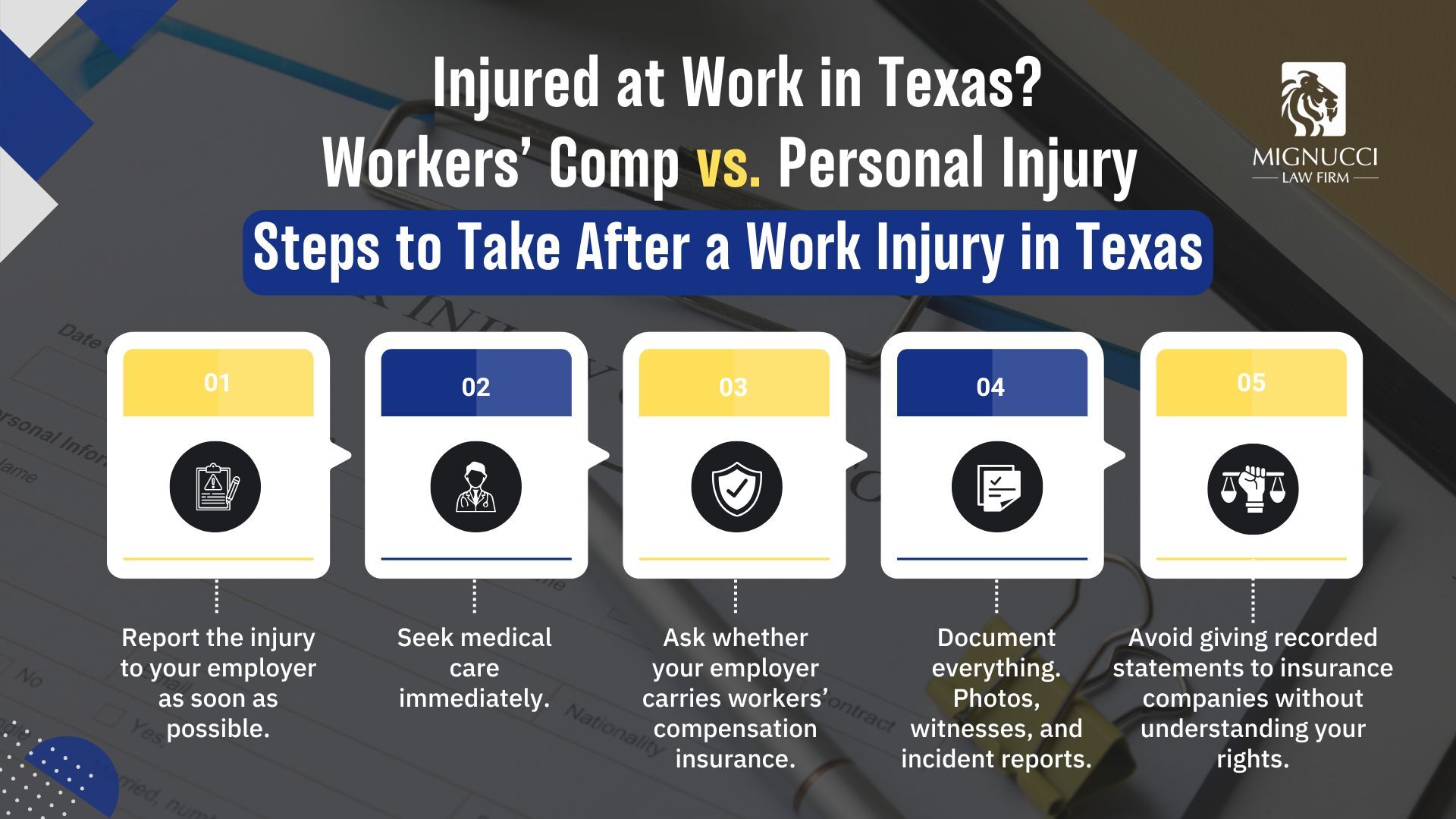
Why Texas Is Different From Most States
Here’s something many people don’t realize. Texas is the only state where most private employers are not required to carry workers’ compensation insurance.
That means your employer can choose:
- To carry workers’ comp coverage
- Or to opt out and become what’s called a “non-subscriber.”
This single decision changes your legal rights in a big way.
If your employer carries workers’ comp, your path usually goes through the Texas workers’ compensation system.
If your employer does not carry workers’ comp, you may have the right to file a personal injury lawsuit directly against them.
Same injury. Two very different legal roads.
What Is Workers’ Compensation in Texas?
Workers’ compensation is a type of insurance that pays certain benefits to employees who are injured on the job.
In Texas, the system is overseen by the Texas Department of Insurance, Division of Workers’ Compensation. If your employer participates in the system, you generally cannot sue them for workplace injuries. In exchange, you receive defined benefits without having to prove they were at fault
What Workers’ Comp Typically Covers
If you qualify, workers’ comp may provide:
- Medical treatment related to the injury
- A portion of your lost wages
- Income benefits if you can’t return to work
- Death benefits for surviving family members in fatal cases
Notice what’s missing? Pain and suffering. Mental anguish. Full wage replacement.
Workers’ compensation is limited by design. It’s meant to provide basic coverage quickly, not full damages.
What Is a Personal Injury Claim for a Work Accident?
A personal injury claim is a lawsuit based on negligence. In simple terms, you’re saying someone failed to act reasonably, and that failure caused your injury.
If your employer does not carry workers’ comp insurance, you can file a personal injury claim directly against them.
In some cases, even if your employer carries workers’ comp, you might still have a personal injury claim against a third party. For example:
- A subcontractor on a construction site
- A property owner
- A manufacturer of defective equipment
Personal injury cases are very different from workers’ comp claims.
What You Can Recover in a Personal Injury Case
If you prove negligence, you may recover:
- Full lost wages
- Loss of future earning capacity
- Medical expenses
- Pain and suffering
- Mental anguish
- Physical impairment
- Disfigurement
That’s a much broader range of compensation.
But there’s a catch. You have to prove fault.
Differences That Matter
Let’s compare the two in real terms.
1. Do You Have to Prove Fault?
Workers’ Comp
- No. You don’t have to prove your employer did anything wrong. You just need to show that the injury happened in the course of your job.
Personal Injury
- Yes. You must prove negligence. That means showing duty, breach, causation, and damages.
If the fault is clear, a personal injury case may result in higher compensation. If the fault is complicated, it can take time to resolve.
2. Can You Sue Your Employer?
Workers’ Comp
- Generally no. If your employer carries workers’ comp, you usually cannot sue them for negligence.
Personal Injury
- Yes, if your employer is a non-subscriber. Texas law allows employees to sue employers who choose not to carry workers’ comp insurance.
And here’s something interesting. In non-subscriber cases, employers lose certain legal defenses. They cannot argue that you assumed the risk of your job or that a co-worker caused the injury. That can make these cases stronger for injured workers.
3. What About Pain and Suffering?
Workers’ Comp
- Not available.
Personal Injury
- Available if proven.
For many injured workers, this is the most emotional part of the process. An injury doesn’t just cost money. It can affect sleep, relationships, daily life, and mental health. Workers’ comp doesn’t account for that. A personal injury case can.
4. How Much of Your Pay Do You Receive?
Workers’ Comp
- Typically, a percentage of your average weekly wage, subject to state limits.
Personal Injury
- You may pursue full lost wages and future income loss if your ability to work is reduced.
If you’re the primary breadwinner for your family, that difference can be life-changing.
Common Workplace Injury Scenarios in Texas
Workplace injuries happen in every industry across the state. Some of the most common include:
- Construction site falls
- Oilfield accidents
- Warehouse equipment injuries
- Delivery driver crashes
- Office slip and fall incidents
- Repetitive strain injuries
In larger cities like Dallas, Houston, San Antonio, and Fort Worth, construction and transportation accidents are especially common due to ongoing development and heavy traffic.
A delivery driver injured in a collision may have a claim involving both workers’ comp and a third-party auto claim. A construction worker injured by faulty scaffolding might have a claim against the equipment manufacturer.
Each situation needs careful review.
What If a Third Party Caused Your Work Injury?
This is where things get layered.
Even if your employer carries workers’ comp, you may still file a personal injury claim against someone else who caused the injury.
For example:
- You’re driving for work, and another driver runs a red light.
- You’re working on a job site, and a subcontractor drops equipment.
- You’re injured by defective machinery.
In these cases, you could receive workers’ comp benefits and pursue a third-party personal injury lawsuit.
That can increase the overall recovery, though the workers’ comp carrier may seek reimbursement from the settlement.
It sounds complicated, and sometimes it is. But it’s also common in serious work injury cases across Texas.
Steps to Take After a Work Injury in Texas
What you do right after an injury matters.
- Report the injury to your employer as soon as possible.
- Seek medical care immediately.
- Ask whether your employer carries workers’ compensation insurance.
- Document everything. Photos, witnesses, and incident reports.
- Avoid giving recorded statements to insurance companies without understanding your rights.
Deadlines apply. In workers’ comp cases, you typically must report the injury within 30 days. For personal injury lawsuits, Texas generally has a two-year statute of limitations.
Missing these windows can affect your case.
When Workers’ Comp May Not Be Enough
Some injuries change your life long-term.
Spinal cord damage. Traumatic brain injuries. Severe burns. Loss of limb. These aren’t minor setbacks. They affect your ability to earn, move, and live the way you did before.
Workers’ comp benefits may not reflect the true financial and personal cost of these injuries.
That’s often when injured workers begin asking a different question: Do I have a lawsuit?
If your employer is a non-subscriber or a third party played a role, the answer might be yes.
The Emotional Side No One Talks About
Work injuries don’t just hit your bank account. They hit your identity.
For many people, work is tied to pride and stability. Being unable to perform your job can feel frustrating and isolating. Add medical appointments and financial stress, and it’s easy to feel overwhelmed.
That’s why understanding your rights matters. When you know your options, you regain some control.
You’re not just reacting. You’re making informed decisions.
How a Lawyer Evaluates Your Case
When reviewing a Texas workplace injury case, an attorney usually looks at:
- Does the employer carry workers’ comp insurance?
- Was a third party involved?
- Is there evidence of negligence?
- What are the total damages, including future impact?
- Are there safety violations or OSHA concerns?
The goal is simple. Identify every possible path to recovery.
Sometimes that’s strictly workers’ comp. Sometimes it’s a lawsuit. Sometimes it’s both.
Local Considerations in Texas Work Injury Cases
Courts, juries, and local industry practices vary across Texas. A construction accident in Dallas County may involve different contractors and safety protocols than an oilfield injury in West Texas.
Understanding how local employers operate and how regional courts handle injury claims can shape case strategy.
If you were hurt on the job in North Texas, it helps to talk with a legal team that deals with both workers’ compensation disputes and personal injury cases on a regular basis. Mignucci Law Firm represents injured clients throughout Texas and can help determine whether your situation is confined to workers’ comp benefits or if you have grounds to file a lawsuit.
So Which One Applies to You?
Here’s the short version:
If your employer carries workers’ comp insurance, you likely go through that system unless a third party was involved.
If your employer does not carry workers’ comp, you may file a personal injury lawsuit against them.
If a third party caused the injury, you may have a separate claim regardless of your employer’s coverage.
The key is finding out what coverage exists and how the injury happened.
Making the Right Call After a Work Injury
Time matters. Evidence fades. Witnesses forget details. Paperwork deadlines pass quietly.
If you’re unsure which category your case falls into, getting legal guidance early can help prevent costly mistakes.
You don’t need to walk into a consultation knowing the law. You just need to know what happened and ask questions.
An experienced Texas injury attorney can review your employer’s insurance status, assess fault, and explain your options clearly. For injured workers who feel stuck between limited benefits and mounting bills, that clarity can bring real peace of mind.
And if you’re in North Texas, Mignucci Law Firm works with injured employees to determine whether their case belongs in the workers’ compensation system or in a courtroom.
Final Thoughts
A workplace injury in Texas isn’t just about getting medical treatment. It’s about understanding your rights.
Workers’ compensation provides structured benefits without the need to prove fault, but it limits what you can recover.
Personal injury claims require proof of negligence, but they open the door to broader damages.
The difference can affect your family’s financial future.
If you’ve been injured at work, take the time to learn where you stand. The system you fall under changes everything.
Frequently Asked Questions
Can I sue my employer in Texas for a workplace injury?
You can sue your employer if they do not carry workers’ compensation insurance. If they participate in the workers’ comp system, you generally cannot sue them for negligence, though third-party claims may still be possible.
How do I know if my employer has workers’ comp coverage?
You can ask your employer directly or check through the Texas Department of Insurance, Division of Workers’ Compensation.
What if I were partly at fault for my injury?
In a workers’ comp claim, fault usually does not matter. In a personal injury lawsuit, Texas follows modified comparative fault rules, which may reduce recovery if you share responsibility.
Can I receive both workers’ comp and a personal injury settlement?
Yes, if a third party caused your injury. Workers’ comp may pay initial benefits while a personal injury claim proceeds separately.
How long do I have to file a claim?
Workers’ comp injuries typically must be reported within 30 days. Personal injury lawsuits in Texas usually must be filed within two years of the injury date.