

How Long Do I Have to File a Personal Injury Claim in Texas?
Published on: November 19, 2025 | Author: MIGAdmin
If you were injured in an accident, one of the first questions you may ask is: “How long do I have to file a personal injury claim in Texas?”
This is an important question because the answer decides whether you can still take legal action or not. Many people wait too long, and by the time they try to file a claim, it’s already too late. At Mignucci Law Firm, we want you to understand your rights, your timeline, and the steps you should take to protect your case.
We break down everything you need to know about filing deadlines, exceptions, and what to do if you’re not sure whether you still qualify to file a claim.
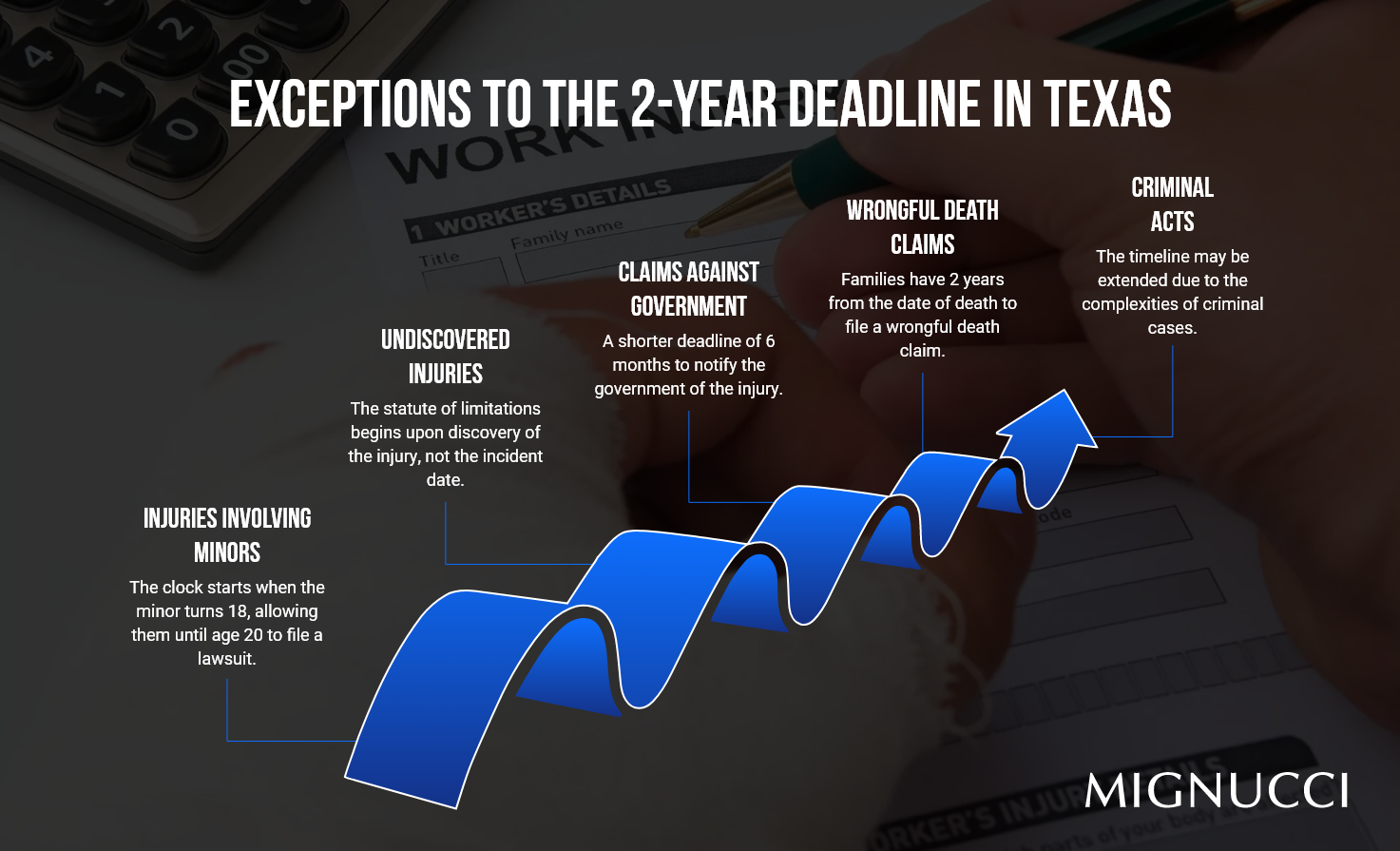
Table of Contents
ToggleUnderstanding the Texas Personal Injury Statute of Limitations
In Texas, the statute of limitations for most personal injury claims is 2 years from the date of the accident. This means you usually have two years to file a lawsuit after your injury.
This rule applies to most cases, including:
- Car accidents
- Truck accidents
- Motorcycle accidents
- Slip and fall injuries
- Dog bites
- Workplace accidents (outside workers’ comp)
- Wrongful death cases
If you try to file a claim after this time limit, the court will most likely dismiss your case. That means you lose your right to recover money for your medical bills, lost wages, pain and suffering, or long-term care.
Time moves fast after an accident. That’s why it’s essential to consult with a lawyer as soon as possible, so you don’t miss the deadline.
Why the 2-Year Deadline Matters
The two-year time frame is not only a legal requirement it also helps protect your case. When you take action early:
- Evidence is easier to gather
- Witnesses remember details better
- Medical records are more accurate
- Insurance companies take your claim seriously
Waiting too long can weaken your case. Insurance companies often take advantage of delays, hoping you miss the deadline. At Mignucci Law Firm, we recommend contacting a legal team promptly after an injury so the process can begin immediately.
Does the Deadline Apply to All Personal Injury Cases?
Most cases follow the 2-year rule, but some situations have different deadlines. Texas law includes a few exceptions depending on who was involved, how the injury happened, and when the injury was discovered.
Below are the most common exceptions.
Exceptions to the 2-Year Deadline in Texas
1. Injuries Involving Minors
If the injured person is under 18, the clock does not start until they turn 18.
This means:
- A minor typically has until age 20 to file a personal injury lawsuit.
Parents can still file a claim on behalf of the child sooner, especially when medical bills and treatment are involved. But the law gives extra time in situations where the child may need to make the claim themselves as an adult.
2. Cases Where the Injury Was Not Discovered Right Away
Sometimes injuries don’t show up immediately. This is called the “discovery rule.”
Examples include:
- Internal injuries
- Medical negligence
- Exposure to harmful chemicals
- Faulty products
In these cases, the statute of limitations may start when the injury is discovered, not when the incident happened. However, proving this is more complex, so having a lawyer is especially helpful.
3. Claims Against a Government Agency
If your injury involved a government vehicle, public property, or a city employee, the deadline is much shorter.
In Texas, you must:
- Give notice within 6 months of the injury
- Follow specific rules for each city or county
For example, the city of Dallas often has additional requirements for submitting a claim. If you miss this early notice deadline, you may lose your right to sue the government completely.
4. Wrongful Death Claims
If someone passes away due to another person’s negligence, the family usually has:
- 2 years from the date of death to file a wrongful death claim.
This is separate from a regular personal injury claim and has its own legal process.
5. Cases Involving Criminal Acts
If the injury happened because of assault, abuse, or another crime, the timeline may be different. Some cases allow extra time due to the emotional and legal complexities involved.
What Happens If You Miss the Filing Deadline?
Missing the deadline is one of the biggest mistakes people make. If you don’t file in time:
- The court will dismiss your case
- You cannot recover compensation
- The insurance company is not required to negotiate
- You lose all legal leverage
Even if your case is strong, the law does not offer exceptions for late filing unless your situation clearly fits one of the limited exceptions.
This is why contacting Mignucci Law Firm early is so important. We help make sure your case is filed correctly and on time.
Why People Often Run Out of Time Without Realizing It
There are many reasons people delay filing a claim:
- They hope their pain will go away
- They think the insurance company will “take care of it”
- They don’t want to deal with paperwork
- They try handling everything alone
- They don’t know the deadline
- They are focused on recovery and ignore the legal process
Insurance companies often delay conversations on purpose. They may:
- Ask for extra documents
- Make you wait for callbacks
- Offer small settlements
- Tell you “we are reviewing your case”
But when the deadline passes, they stop responding, and legally, there’s nothing you can do.
Taking action early can prevent this from happening.
How Mignucci Law Firm Helps You Protect Your Timeline
At Mignucci Law Firm, our goal is to make the legal process simple and stress-free. When you contact us after an injury, we help you:
- Understand exactly how much time you have
- Gather medical records and accident reports
- Build your case from day one
- Speak with insurance companies on your behalf
- Make sure all documents are filed on time
- Keep track of every legal deadline
We understand how stressful an accident can be, especially when you’re trying to focus on healing. That’s why our team handles the legal side while you focus on your recovery.
Why Acting Fast Helps You Get a Better Settlement
Many people don’t realize that timing affects the value of their claim.
Filing early can help you recover more because:
- Your injuries are documented sooner
- Your doctor can connect your injuries directly to the accident
- Evidence doesn’t get lost
- Witness memories are fresh
- Insurance companies see that you’re serious
At Mignucci Law Firm, we work on cases in Texas and the Dallas area, helping victims take the right steps from the start.
When Should You Call a Lawyer?
The best time to talk to a lawyer is right after the accident. But even if some time has passed, call as soon as you can. The sooner you reach out, the easier it is to protect your case.
Whether your accident happened yesterday, last month, or last year, it’s worth speaking with Mignucci Law Firm to check your deadline.
Final Thoughts
So, how long do you have to file a personal injury claim in Texas?
In most cases, you have 2 years, but certain situations may give you more or less time. Because every case is different, talking to a lawyer early is the best way to protect yourself.
At Mignucci Law Firm, we proudly help injured individuals across Texas and the Dallas area understand their rights and take action before time runs out. If you or a loved one has been injured, reach out today. We’re here to guide you every step of the way.
Frequently Asked Questions
What if I didn’t feel pain right away?
You may still have a case, especially if the injury became noticeable later. The discovery rule may apply.
What if the insurance company were still talking to me after 2 years?
If you didn’t file a lawsuit before the deadline, negotiations mean nothing. You need a lawyer to protect you from delays.
Can I still file a claim if I was partly at fault?
Yes. Texas follows “proportionate responsibility.” As long as you’re less than 51% at fault, you can recover compensation.
Do I need a lawyer to file a claim?
Technically, no, but personal injury cases are complex. A lawyer helps increase your chances of getting fair compensation.