

High-Risk Intersections in DFW: Crash Data, Maps, and Driving Tips
Published on: April 22, 2026 | Author: MIGAdmin
Construction sites are bustling with activity, from heavy machinery operating to workers navigating complex structures. While these sites drive growth and development in cities like Dallas and Denton, TX, they also carry a high risk of accidents. Understanding liability for construction site injuries in Texas is critical, whether you’re a worker, contractor, or property owner. If you’re injured on a worksite, consulting a Dallas construction accident lawyer can help protect your rights and ensure you receive proper compensation. This article breaks down the laws, responsibilities, and practical steps for anyone involved in construction site incidents.
Table of Contents
ToggleUnderstanding Construction Site Injuries in Dallas, Texas
Construction sites are inherently risky. Workers face hazards such as falling from heights, being struck by equipment, electrocution, and exposure to hazardous materials. According to the Texas Department of Insurance, workplace accidents in construction remain among the most common causes of serious injury in the state.
In cities like Dallas and Denton, TX, ongoing commercial and residential projects mean that injuries can happen anywhere—from large high-rise developments to smaller neighborhood construction sites. While safety regulations are in place, accidents still occur, making it crucial to know who can be held responsible under Texas law.
Texas Law and Construction Site Liability
Liability for injuries on construction sites is governed by a combination of state laws, workplace safety regulations, and contractual obligations. Two main areas determine responsibility: workers’ compensation and third-party liability.
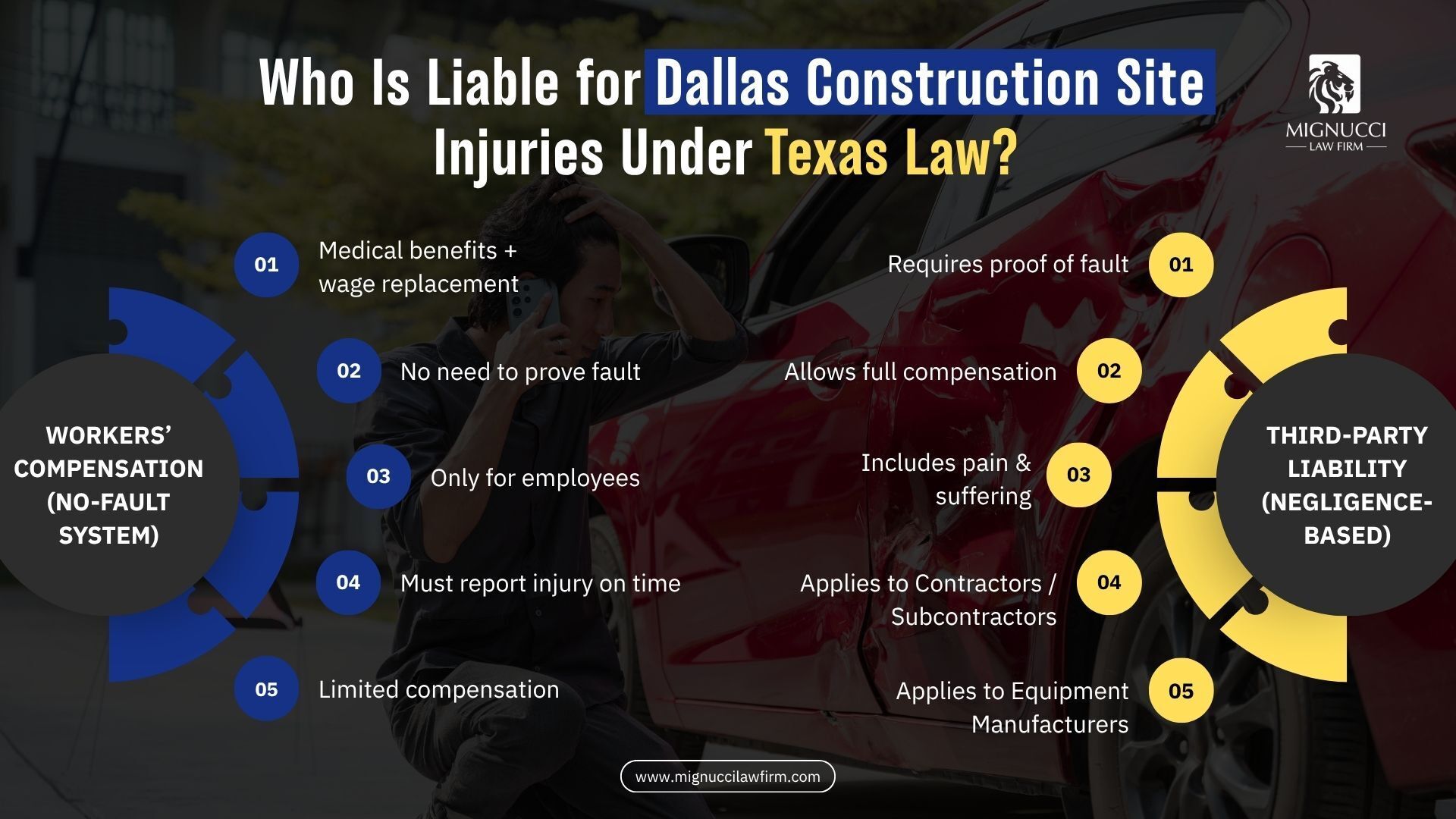
Workers’ Compensation
Texas has a no-fault workers’ compensation system. If you are injured on the job and your employer carries workers’ compensation insurance, you can generally receive medical benefits and wage replacement without needing to prove fault.
However, there are important limitations:
- Only employees are eligible—independent contractors may not be covered.
- Claims must be reported promptly, and the injury must occur during work duties.
- Severe negligence by an employer does not usually allow for additional compensation beyond what workers’ comp provides.
Workers’ compensation provides quick assistance but may not cover long-term damages like pain and suffering.
Third-Party Liability
Not all injuries fall neatly under workers’ compensation. Sometimes, another party’s negligence can make them liable for damages. Examples include:
- Contractors and subcontractors who fail to follow safety regulations
- Property owners who neglect to maintain a safe environment
- Equipment manufacturers, if faulty machinery causes injury
For instance, if a worker falls due to a defective scaffold supplied by a subcontractor, the injured party may pursue a claim against the subcontractor instead of, or in addition to, workers’ compensation.
Common Causes of Construction Site Injuries in Dallas
Understanding the typical causes of construction injuries can clarify liability and help prevent future accidents. Some frequent hazards include:
- Falls from heights – ladders, scaffolds, and roofs are common sites of falls.
- Struck-by incidents – machinery, tools, or falling objects can cause serious injury.
- Electrocution – exposed wiring or contact with power lines.
- Trench collapses – improper excavation safety measures lead to deadly accidents.
- Repetitive motion or overexertion – long-term injuries from lifting or awkward postures.
In Dallas and Denton, TX, where construction is booming, these risks are heightened due to high activity and tight project deadlines.
Determining Responsibility on the Construction Site
When an accident occurs, multiple parties may share responsibility. Texas law looks at negligence and the duty of care to assign liability.
- Employers are responsible for providing a safe workplace, including proper training, safety equipment, and supervision.
- Contractors and subcontractors must follow building codes and industry safety standards.
- Property owners may be liable if unsafe site conditions contribute to an accident.
- Manufacturers can be held accountable for equipment failures or design defects.
Proving liability often requires evidence such as accident reports, witness statements, photographs, and maintenance records.
Steps to Take After a Construction Injury
If you or a loved one is injured at a construction site in Dallas, taking prompt, organized action is key:
- Seek medical attention immediately – your health comes first, and documentation is essential for claims.
- Report the incident – inform your employer or site supervisor. In Texas, timely reporting affects workers’ compensation eligibility.
- Document everything – photos, names of witnesses, and site conditions are valuable evidence.
- Consult an attorney – an experienced lawyer can help determine whether a workers’ comp claim, third-party lawsuit, or both are appropriate.
- Keep detailed records – medical bills, communication with insurance, and time off work support your case.
Following these steps can protect your rights and increase the chances of fair compensation.
Navigating Construction Accident Claims in Dallas
Construction injury claims in Texas can be complex. The state’s laws, combined with multiple potentially responsible parties, mean that legal guidance is often necessary.
A lawyer can:
- Analyze whether workers’ compensation is sufficient or if a third-party claim is possible.
- Investigate the accident and identify all liable parties.
- Negotiate with insurance companies to ensure fair compensation.
- Represent injured workers in court if necessary.
For residents of Dallas and Denton, TX, having access to local expertise ensures that state-specific regulations and local building practices are considered in any claim.
Preventing Construction Injuries: Safety on the Job
While accidents happen, prevention is possible. Common safety measures include:
- Proper training for all workers
- Safety equipment such as harnesses, helmets, and gloves
- Regular site inspections to identify hazards
- Clear communication about risks and procedures
- Compliance with OSHA regulations
Employers and contractors who take safety seriously not only reduce injury risk but also limit potential legal liability.
Conclusion
Construction site injuries in Dallas and Denton, TX, can be life-changing, affecting physical health, income, and family stability. Texas law provides mechanisms like workers’ compensation to help injured employees, but understanding who is liable in more complex situations is crucial. Liability may fall on employers, contractors, property owners, or equipment manufacturers, depending on the circumstances.
If you’re facing the aftermath of a construction accident, consulting an experienced local attorney can make a significant difference. At Mignucci Law Firm, we help victims navigate the legal system, ensure their rights are protected, and seek the compensation they deserve.
By understanding your rights and the responsibilities of all parties involved, you can move forward with confidence and security after a construction site injury.
Frequently Asked Questions
Who can file a claim for a construction site injury in Texas?
Employees with workers’ compensation coverage can file a claim, and injured parties may pursue third-party claims if another party’s negligence contributed to the accident.
Are independent contractors covered by workers’ compensation?
Usually not. Independent contractors may need to rely on third-party claims or private insurance.
How long do I have to file a claim for a construction injury in Texas?
Workers’ compensation claims must generally be reported promptly, while personal injury claims have a statute of limitations of two years from the date of injury.
What damages can I recover from a third-party construction accident claim?
Compensation can include medical expenses, lost wages, pain and suffering, and in some cases, future care costs.
How do I prove liability on a construction site?
Evidence such as accident reports, witness statements, photographs, and maintenance records are critical for establishing negligence.