

How Dallas Weather Causes Car Accidents: Rain, Storms & Road Risks Explained
Published on: April 13, 2026 | Author: MIGAdmin
Driving in Dallas, Texas, can be a daily adventure, especially when the weather decides to throw a curveball. From sudden downpours to gusty winds and unpredictable storms, the conditions on the road can change in minutes. For drivers in Dallas and nearby areas like Denton, TX, these weather factors play a significant role in the city’s traffic accidents. Understanding how weather contributes to crashes is key to staying safe and avoiding injuries. If you’re hurt in a Dallas car accident caused by weather, a Dallas personal injury attorney can help you navigate your claim.
Table of Contents
Toggle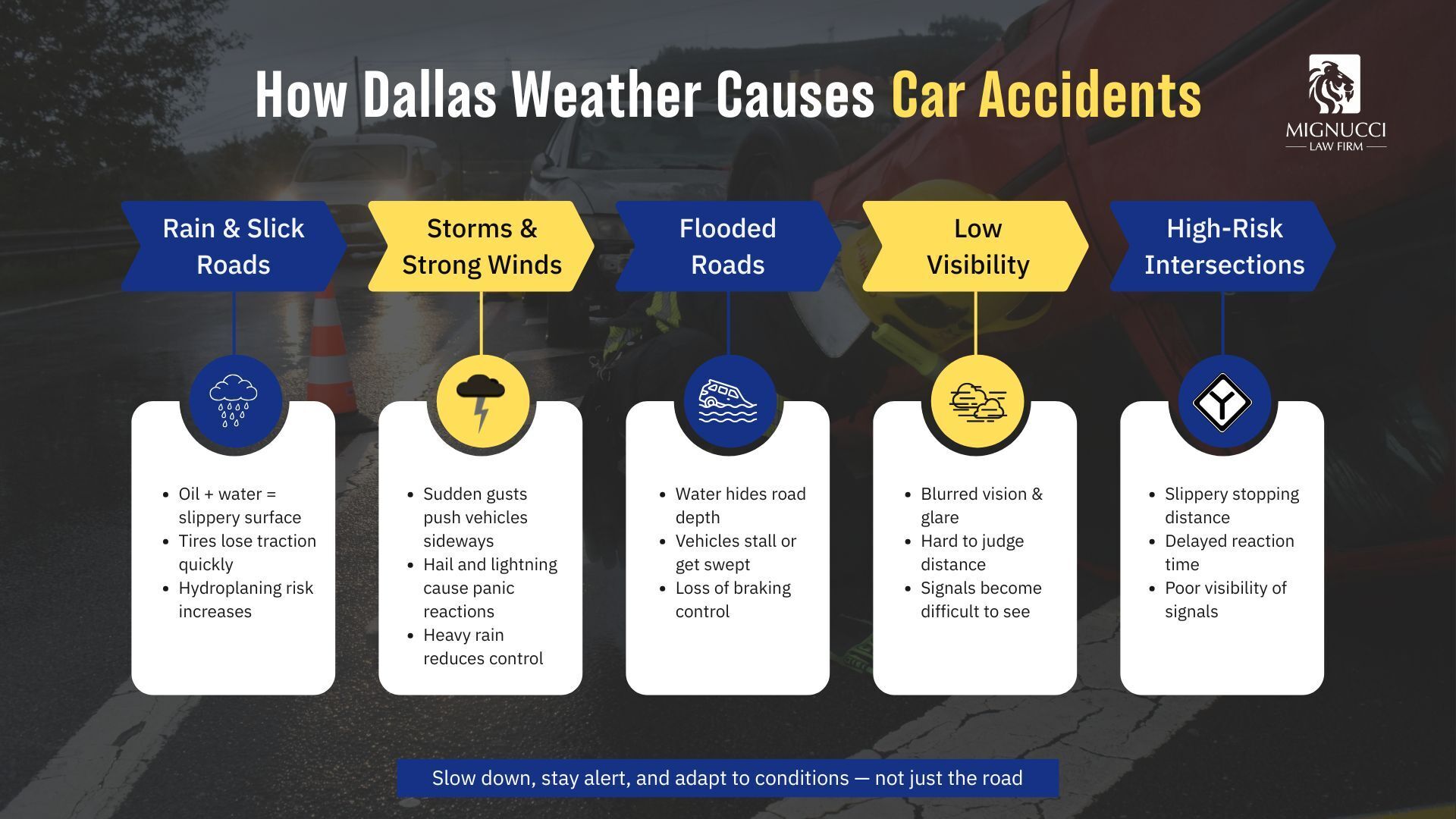
This article breaks down the main ways Dallas weather affects driving, explores common accident patterns, and offers guidance on what to do if you’re involved in a crash due to weather conditions.
Rain and Slick Roads: The Hidden Danger
One of the most frequent contributors to car accidents in Dallas is rain. At first glance, a drizzle may not seem like a serious threat, but even a small amount of water can turn roads into slick surfaces. Roads become especially dangerous during the first few minutes of a rainfall, as oil and dust residues on asphalt mix with water, creating a slippery layer.
Drivers often underestimate how quickly rain affects traction. Hydroplaning is a real concern—this occurs when tires lose contact with the road surface, causing the car to slide uncontrollably. Hydroplaning is more likely at higher speeds or on worn tires, which many local drivers may not notice until it’s too late.
In addition to traction issues, visibility drops significantly during heavy rain. Windshield wipers can only do so much, and blurred vision increases the chance of collisions at intersections or when changing lanes. Areas with frequent traffic, such as downtown Dallas or busy corridors in Denton, are particularly vulnerable during wet conditions.
Tips for drivers in rainy Dallas weather:
- Reduce speed and allow extra distance between vehicles.
- Avoid sudden braking or sharp turns on wet roads.
- Check tire tread depth regularly to maintain traction.
- Be extra cautious at intersections and merging lanes.
Storms and Severe Weather: Thunder, Lightning, and Gusty Winds
Dallas is no stranger to thunderstorms, especially in the spring and summer months. Severe weather introduces multiple hazards for drivers. Heavy rain, combined with strong gusts, can push vehicles off course, making control difficult even for experienced drivers.
Lightning and hailstorms are more than just a spectacle—they can startle drivers, leading to abrupt maneuvers that result in accidents. Hail can also damage vehicles, creating blind spots or cracked windshields that make safe driving nearly impossible.
Wind is another factor. High-speed gusts can move larger vehicles like SUVs and trucks, increasing the likelihood of collisions. Drivers may not notice the subtle push of wind until it’s too late, especially on open highways or bridges connecting Dallas to Denton and other areas.
Flooded Streets: A Common Risk in Dallas and Denton
Flash flooding is a frequent concern during heavy storms in North Texas. Dallas and Denton, TX, have areas prone to flooding due to urban development, low-lying streets, and inadequate drainage systems in some neighborhoods.
Even a few inches of water can make driving dangerous. Many accidents occur when drivers underestimate water depth or attempt to drive through flooded roads. Vehicles can stall, slide, or even be swept away in strong currents.
Safety tips for flood-prone areas:
- Never drive through water when unsure of depth.
- Turn around and find an alternate route.
- Avoid shortcuts through low-lying streets during heavy rain.
- Monitor local flood alerts and city warnings before heading out.
Poor Visibility: Fog, Dust, and Nighttime Hazards
Weather isn’t always about rain or storms. Dallas experiences occasional fog and dust storms, particularly during transitional seasons. Fog can dramatically reduce visibility, making it hard to judge distances or notice traffic signals. Dust storms, while less frequent, can appear suddenly on highways or open roads, creating hazards for high-speed traffic.
Nighttime driving in combination with adverse weather adds another layer of danger. Streetlights and headlights reflect off wet surfaces, creating glare. Reduced visibility and slower reaction times increase the likelihood of rear-end collisions or lane departures.
Intersection Risks During Bad Weather
Certain areas in Dallas and Denton are notorious for car accidents, especially when the weather turns bad. Intersections are particularly risky. Drivers may misjudge stopping distances on slick surfaces, run red lights during heavy rain, or fail to see other vehicles obscured by rain or fog.
Some of the highest-risk intersections are those with heavy commuter traffic, poorly timed signals, or complex lane patterns. During storms, these factors are amplified, and even minor driver mistakes can lead to serious accidents. If you’re injured in one of these crashes, a Dallas car accident lawyer can help you pursue compensation and protect your legal rights.
Common Weather-Related Accident Types
The weather in Dallas contributes to several types of crashes:
- Rear-end collisions: Slippery roads make it hard to stop quickly, causing vehicles to collide.
- Side-impact accidents: Reduced visibility and misjudged turns at intersections often lead to T-bone crashes.
- Single-vehicle accidents: Drivers may lose control due to hydroplaning, slick curves, or sudden gusts of wind.
Multi-car pileups: On highways during storms, a single accident can quickly involve multiple vehicles due to reduced visibility and reaction time.
How Drivers Can Reduce Risks
While weather-related accidents can’t be entirely avoided, drivers in Dallas and Denton can take proactive steps to lower their chances of being involved in a crash:
- Plan: Check weather forecasts before driving. Delaying non-essential trips during heavy storms is often the safest choice.
- Maintain vehicles: Properly inflated tires, functioning brakes, and clear windshield wipers are essential.
- Adjust driving habits: Slow down in rain, increase following distance, and avoid sudden maneuvers.
- Stay alert at intersections: Rain and storms make it harder to anticipate other drivers’ actions. Take extra caution.
Use lights wisely: Headlights improve visibility and help other drivers see you. Avoid high beams in fog or heavy rain.
Legal and Insurance Considerations
Accidents caused by weather can still involve legal and insurance questions. Even if conditions contributed to a crash, drivers may be liable if they were speeding, distracted, or otherwise negligent.
If you’re involved in a weather-related accident in Dallas or Denton, TX:
- Document the scene with photos and notes, including weather conditions.
- Contact local authorities to file a report. The Dallas Police Department and the Denton Police Department both provide guidance on accident reporting.
- Notify your insurance company promptly. Provide accurate details without exaggeration.
- Consider consulting a personal injury attorney if there are injuries, property damage disputes, or liability questions.
Professional guidance can clarify responsibilities, especially in cases where slippery roads or poor visibility played a major role in the accident.
Local Resources for Drivers
For those navigating Dallas and Denton roads, staying informed and prepared is key:
- Dallas Police Department – Traffic Division: Provides accident reporting and traffic safety resources.
- Denton Police Department – Traffic Services: Offers guidance on crashes, road closures, and local alerts.
- Texas Department of Transportation (TxDOT): Updates on road conditions, weather advisories, and construction.
These resources help drivers make informed choices and respond appropriately after accidents.
Why Awareness Matters
Weather conditions are unpredictable, but driver preparedness can make a major difference. By understanding how rain, storms, floods, and poor visibility affect Dallas roads, motorists can reduce the risk of accidents. Defensive driving, vehicle maintenance, and situational awareness are practical ways to stay safe.
For residents of Dallas and Denton, TX, knowing the local patterns—such as areas prone to flooding or intersections with high crash rates—adds an extra layer of protection. Safe driving isn’t just about following the rules; it’s about anticipating hazards and adjusting to conditions in real time.
Even with caution, accidents can happen. Being informed about how weather impacts driving conditions, combined with knowing your rights and available resources, ensures you’re prepared to respond effectively if the unexpected occurs.
Conclusion
Dallas weather, from sudden rain showers to severe storms, plays a major role in traffic accidents. Hydroplaning, reduced visibility, wind gusts, and flooded streets all contribute to the city’s road hazards. Drivers in Dallas and Denton, TX, can reduce risk by staying alert, adjusting driving habits, and maintaining their vehicles.
If you or a loved one is involved in a weather-related car accident, seeking legal advice can help protect your rights and ensure fair treatment, particularly when injuries or liability questions arise. Mignucci Law Firm understands the challenges Dallas drivers face and can guide you through the legal process with experience and care.
Safe driving in unpredictable weather isn’t just about luck—it’s about preparation, awareness, and informed choices.
Frequently Asked Questions
Does rain always cause accidents in Dallas?
Not always, but rain increases the risk by creating slick roads and reducing visibility. Caution and adjusted driving habits are crucial.
How can I prevent hydroplaning?
Reduce speed, maintain proper tire tread, and avoid sudden braking or sharp turns on wet roads.
Are certain Dallas intersections more dangerous during storms?
Yes, intersections with heavy traffic, complex lane patterns, or poor signal timing are higher risk during bad weather.
What should I do if my car stalls in floodwater?
Exit safely if possible, avoid trying to restart the car, and call emergency services. Never attempt to drive through deep water.
Can I file an insurance claim for weather-related accidents?
Yes, but accurate documentation of the scene and circumstances is important. Consulting legal guidance may be helpful if injuries or liability disputes occur.