

High-Risk Intersections in DFW: Crash Data, Maps, and Driving Tips
Published on: April 6, 2026 | Author: MIGAdmin
Navigating the roads around Dallas, Texas, can be tricky. While the city and surrounding areas like Denton, TX, are bustling with commuters, shoppers, and families, certain intersections consistently record higher crash rates. Understanding which areas are riskier, why accidents happen, and how to stay safe can make a big difference for drivers, passengers, and pedestrians alike. If you’re involved in a serious collision, consulting a Dallas car accident lawyer can help protect your rights. In this article, we’ll break down the most dangerous intersections in Dallas and DFW, examine the crash data, and provide practical tips for safer driving.
Table of Contents
ToggleThe Most Dangerous Intersections in Dallas
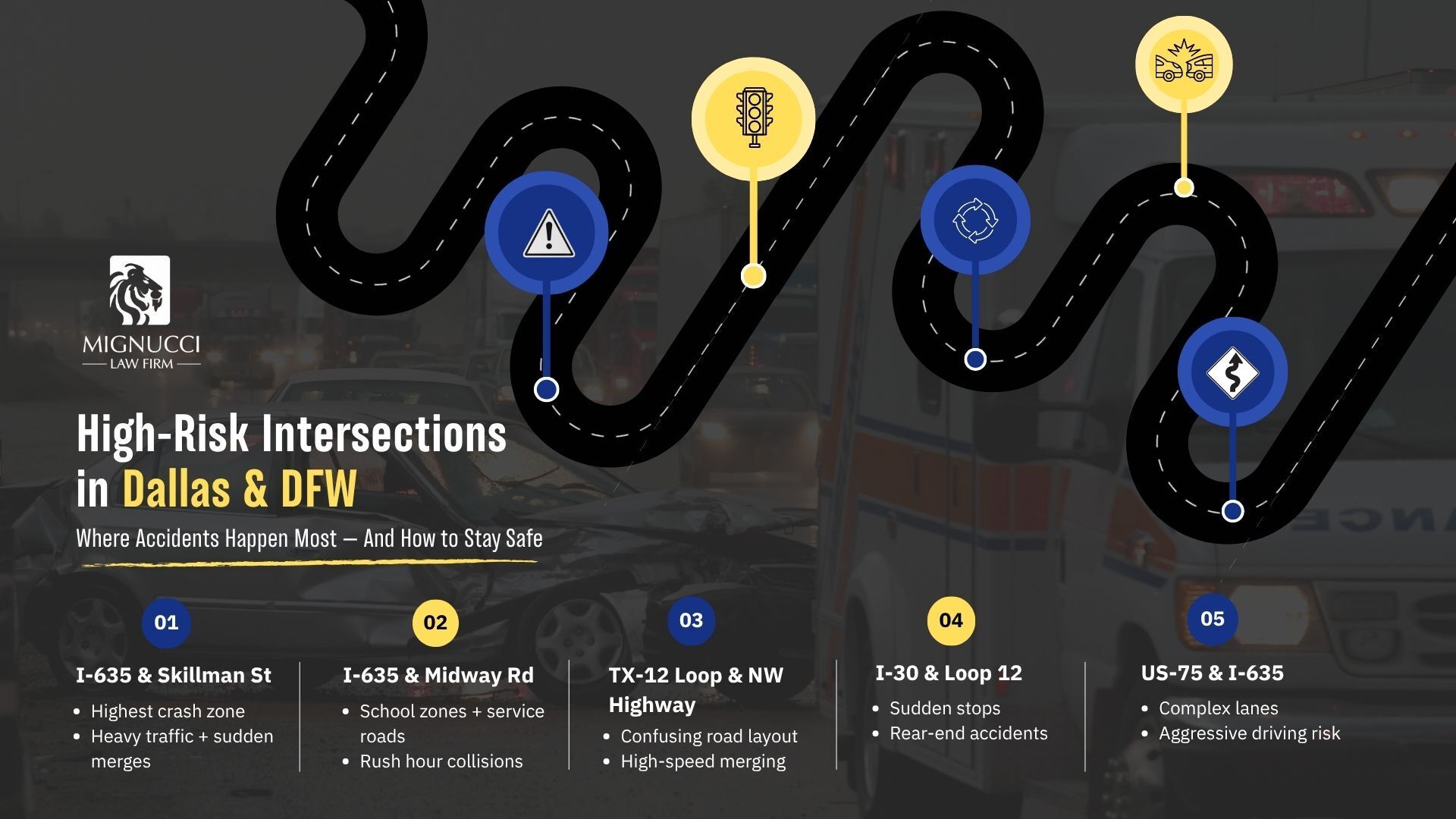
Over the past five years, traffic data from TxDOT and local crash reports have highlighted specific intersections as particularly hazardous. These hotspots are often marked by complex road layouts, heavy traffic, and challenging driving conditions. Here are the top locations to be aware of:
I-635 & Skillman Street
With around 256 crashes reported in five years, this intersection tops the list. The I-635 and Skillman Street interchange is a multi-level freeway setup surrounded by busy retail zones and dense residential areas. Drivers often encounter sudden merges, confusing lane changes, and heavy congestion, making split-second decisions that can easily lead to accidents.
I-635 & Midway Road
This intersection has seen approximately 183 crashes over five years. Midway Road runs through neighborhoods and school zones, adding to the complexity. Multiple ramps and service roads intersect here, increasing the likelihood of collisions during rush hours or sudden traffic slowdowns.
TX-12 Loop & TX-348 Spur (Northwest Highway Area)
About 163 crashes occurred in the last five years at this junction. Its loops and connectors can confuse drivers unfamiliar with the area, and high-speed merging combined with commercial traffic creates a volatile mix.
I-30 & TX-12 Loop
Recording roughly 152 crashes in five years, this crossing is a major freeway junction where congestion and sudden stops are common. Drivers entering or exiting the freeway often face unexpected slowdowns, increasing rear-end collisions.
US-75 & I-635 Interchange (“High Five” Interchange)
This interchange has earned a notorious reputation with dense traffic and complex merging lanes. Aggressive driving, combined with heavy vehicle volumes, makes it one of the highest-risk spots in Dallas.
Other Notable Crash Hotspots
Beyond these major intersections, certain areas repeatedly appear in accident reports:
- Northwest Highway (Loop 12) & US-75
- Skillman Street & Royal Lane near I-635
- Northwest Highway & Preston Road
- Commerce Street & Cesar Chavez Boulevard
These locations often share common issues: high traffic volume, multiple merging lanes, and nearby commercial activity that adds to vehicle congestion.
Roads Feeding High-Risk Intersections
Many crashes don’t just happen at the intersections—they often start on the roads leading to them. In Dallas, several major roads contribute to these hazards:
- I-635 (LBJ Freeway): Constant congestion and frequent construction zones make driving unpredictable.
- US-75 (Central Expressway): Sudden slowdowns and frequent lane changes heighten collision risk.
- I-30: High-speed traffic combined with merging from service roads can catch drivers off guard.
- Loop 12 (Northwest Highway): Numerous intersections along this road mean stop-and-go traffic is common.
Understanding these contributing factors helps drivers anticipate trouble and adjust their driving accordingly.
Dallas Crash Statistics
To put things into perspective:
- More than 16,000 crashes were reported across Dallas in 2024.
- Over 100 fatal crashes occur each year, a significant number happening at high-volume intersections and freeway interchanges.
These statistics emphasize that certain intersections consistently attract more accidents, making awareness and careful driving essential.
Why These Intersections Are Dangerous
Several patterns consistently appear when analyzing high-crash locations in Dallas:
1. Complex Road Design
Multi-level interchanges, frontage roads, and confusing signage can overwhelm even experienced drivers. Navigating these setups during heavy traffic increases the chance of mistakes.
2. High-Speed Traffic
Many arterial roads in Dallas allow speeds between 40 and 60 mph. Drivers often misjudge gaps when merging or turning, which can lead to collisions.
3. Congestion and Sudden Stops
Rush hour in Dallas and the DFW area is synonymous with stop-and-go traffic. Sudden slowdowns frequently result in rear-end and chain-reaction accidents.
4. Visibility and Signal Timing Issues
Short yellow lights, obstructed sightlines, and poorly synchronized traffic signals force drivers into quick, risky decisions, particularly at freeway interchanges.
Understanding Crash Data with Maps
The City of Dallas offers an interactive crash map dataset, which is invaluable for drivers, city planners, and safety advocates. Using these maps, you can:
- Identify high-crash clusters in neighborhoods like Downtown Dallas, North Dallas, or areas near Denton, TX.
- Analyze traffic patterns to see which intersections and corridors are most frequently involved in collisions.
- Plan safer routes by understanding peak traffic times and accident-prone zones.
These insights not only help drivers but also support local businesses, law enforcement, and legal professionals in addressing safety concerns.
Practical Safety Tips for Drivers in Dallas & DFW
Staying safe at high-risk intersections requires a mix of awareness, anticipation, and patience. Here are some actionable tips:
- Avoid lane changes near complex interchanges. Moving lanes at multi-level intersections increases collision risk.
- Slow down approaching yellow lights. Hurrying through signals is a common cause of accidents.
- Expect sudden stops on major highways like I-635 and US-75. Traffic can slow abruptly, especially near ramps.
- Exercise extra caution during rush hour and rainy conditions. Wet roads and heavy traffic amplify risks.
- Know your local intersections. Familiarity with traffic patterns, nearby schools, and commercial areas can help you anticipate hazards.
Even experienced drivers benefit from planning their routes and driving defensively in these high-risk zones.
The Role of Legal Awareness
Accidents at these high-risk intersections often involve multiple vehicles and complex liability issues. For residents in Dallas, Texas, or nearby Denton, TX, understanding legal rights and options can be crucial after a crash. Professional guidance from a firm like ours, Mignucci Law Firm, helps injured parties navigate insurance claims and legal processes, ensuring they are not left handling complicated situations alone.
Looking Ahead: Safer Driving in Dallas
While the data highlights areas of concern, awareness, and preparation make a real difference. By understanding the most dangerous intersections, monitoring traffic patterns, and driving cautiously, residents of Dallas and DFW can reduce the likelihood of accidents. Local authorities also continue to implement traffic safety measures, signal improvements, and public awareness campaigns to address high-crash zones.
Driving in Dallas may come with challenges, but with the right knowledge and safety mindset, accidents are not inevitable. Careful planning, observation, and defensive driving remain the best tools for keeping yourself and others safe on the road.
Frequently Asked Questions
What is the most dangerous intersection in Dallas?
I-635 and Skillman Street consistently rank as the most dangerous, with complex interchanges and high traffic volume contributing to accidents.
How many crashes occur annually in Dallas?
Dallas sees over 16,000 crashes each year, with more than 100 resulting in fatalities.
Which roads contribute most to high-risk intersections?
Major roads like I-635, US-75, I-30, and Loop 12 often feed into dangerous intersections, causing congestion and higher crash risks.
How can I check Dallas crash data?
The City of Dallas provides interactive crash maps online, which highlight high-crash clusters and help plan safer routes.
Are legal services necessary after an accident at a high-risk intersection?
Consulting a law firm like Mignucci Law Firm can help navigate claims, insurance, and liability issues after a crash.