

How an Attorney Helps After a Car Accident (Dallas): What You Lose Going Solo
Published on: January 23, 2026 | Author: MIGAdmin
After a crash, the confusion comes first
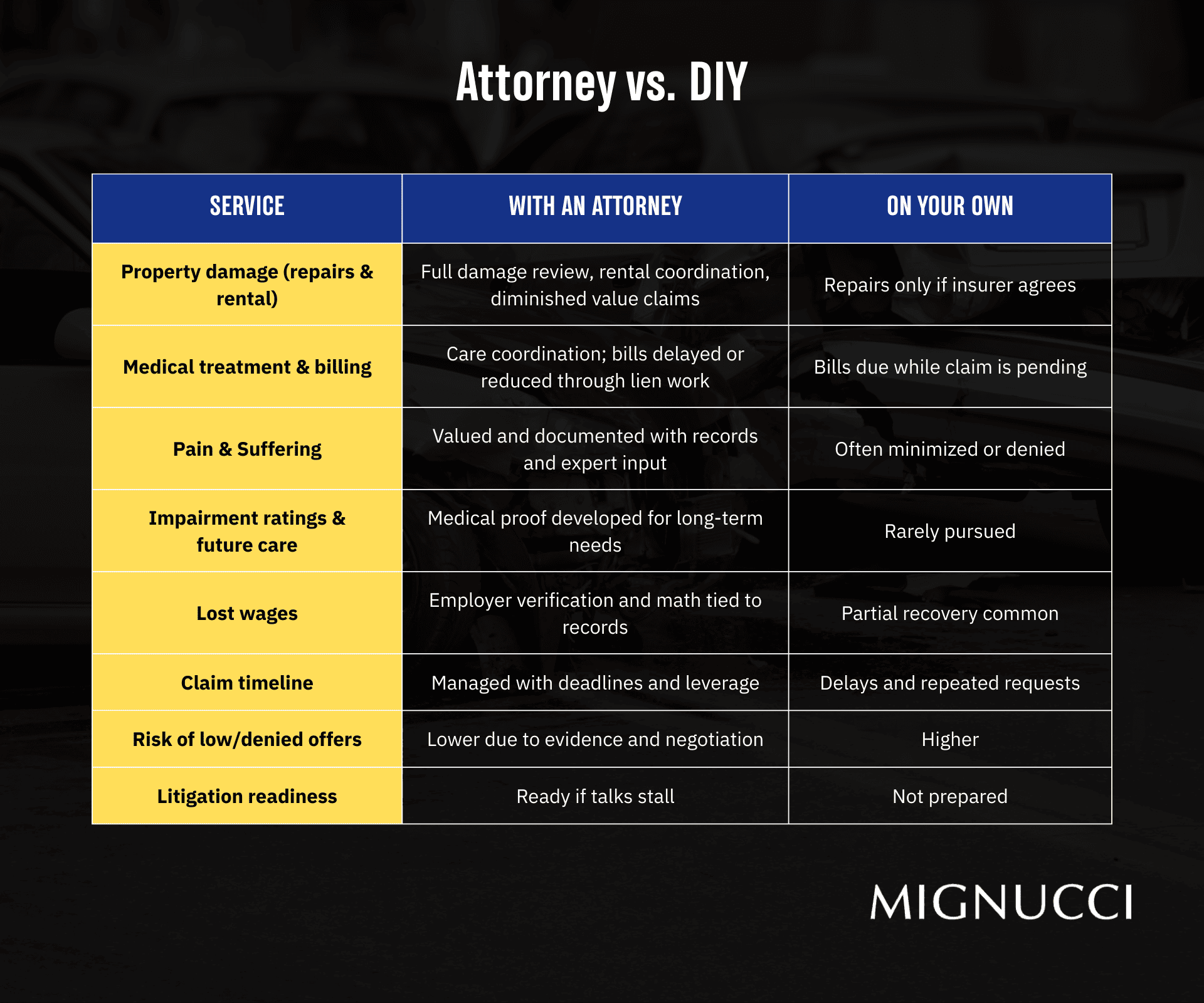
A serious wreck can leave you shaken, injured, and unsure what to do next. Medical bills arrive fast. Insurance calls start early. You are asked to make choices that affect your health and finances long after the car is fixed.
This guide shows the practical differences between hiring a personal injury attorney and handling a Texas car accident claim on your own—so you can decide with clear expectations.
Table of Contents
ToggleThe three biggest differences
- Medical bills: Attorneys arrange care and reduce liens so treatment does not stop.
- Value: Pain, impairment, and future care are proven, not guessed.
- Leverage: Insurers respond when litigation is on the table.
Top reasons to hire an attorney after a Dallas car accident
- Medical billing protection and lien negotiation: Treatment often costs more than people expect. An attorney works with providers so bills wait until the claim resolves. Example: ER + imaging + therapy placed on a lien rather than sent to collections.
- Higher recovery for pain and suffering: Texas allows non-economic damages when supported by records. Example: consistent therapy notes and imaging tied to daily limits raise settlement offers.
- Evidence management and impairment ratings: Crash reports, photos, black-box data, and medical opinions are gathered early. Example: a permanent impairment rating supports future care costs.
- Uninsured/underinsured motorist claims: Many Dallas drivers carry low limits. Attorneys trigger UM/UIM coverage and meet notice rules. Example: recovering from your own policy after a hit-and-run.
- All insurer communications handled: Adjusters push for recorded statements and quick releases. Your lawyer takes those calls so you can focus on healing.
What a typical case timeline looks like
- Immediate (0–2 weeks): evidence collection, crash analysis, medical referrals
- Short term (2–12 weeks): billing review, insurance negotiations, wage proof
- Mid/long term (3–12 months+): impairment ratings, future care planning, suit filed if talks fail
Common objections, answered
- “I can handle it myself.”
Rebuttal: Self-handled claims often close before the full medical picture is known.
- “Attorneys cost too much.”
Personal injury cases use a contingency fee. No fee unless money is recovered.
- “I do not want to sue.”
Most cases resolve through negotiation. Litigation is a backstop when offers stay low.
Why choose Mignucci Law Firm
- Trial-ready representation in Texas personal injury cases
- Bilingual support (English/Spanish)
- Proven recoveries for injured clients
- Client-first communication
Call Gus Mignucci for a free consultation—get your claim reviewed today.
Frequently Asked Questions
When should I hire an attorney after an accident?
As soon as injuries are suspected or insurance questions start. Early work preserves proof.
How do attorneys get paid?
Through a contingency fee taken from the recovery, not upfront.
Can an attorney help if the other driver is uninsured?
Yes. UM/UIM claims and policy stacking may apply.
What if I am partly at fault?
Texas follows proportionate responsibility. Recovery may still be available below the threshold.
How long do I have to file a PI claim in Texas?
Generally two years.